Pages

Showing posts with label Solar Energy. Show all posts

Thursday, September 25, 2014

What is Best Buying or Leasing Solar Panel System?

Whether to buy or lease solar panels depends of certain circumstances. It includes financial capacity and location conditions also! One can decide in better manner about leasing or buying the solar panel system. Right financing options varies from person to person. That’s why it’s hard to say that what is best for you that whether to buy or lease solar panel system.

Here comparative conditions are given which will allow you to know what is best buying or leasing solar panel systems.

You can Lease Solar Panel System If….


  • You are only interested in using renewable energy and don’t want maximum financial benefits from solar panel system.
  • The maintenance responsibility of solar panel system you want to take.
  • You don’t want to invest your cash in buying solar panel system.
  • You are a low tax payer and you know that you won’t get any benefit from the federal investment tax credits resulting from your investment in solar power system.
  • You are not willing to wait for whole one year so that you can have the benefits of tax credits.
  • You are having your credit score below 700

Cost for Leasing Solar Power System


Cost of leasing solar power panels is about $3000 that you can get from anywhere.

Maintenance


The maintenance of your solar PV system is always done by the solar power leasing company. Most of companies had developed mobile apps that help you to monitor the performance of you solar PV system.

Drawbacks


The drawback of solar power leasing is that you will not qualify for any tax credits, rebates, depreciation and incentives.

Benefits


In benefits you can have 10 to 50% savings over your utility for electricity and that depends on your location, state incentives or property characteristics.

You can Buy with Cash or Finance with Solar Loan If….


  1. Your primary interest is to maximize financial benefits of installing a solar panel system.
  2. You can take advantage from reducing the amount of federal and state taxes which you pay have a tax liability. This larger than the amount of credits you can receive.
  3. You have enough cash capital that you can borrow or can pay for the solar PV system.
  4. You are having a business and know well tax benefits through treating the system as a depreciable asset.
  5. You are planning to sale out your home and want to increase its overall value. The solar photovoltaic system will instantly increase the net worth of your house or property.

Cost of Buying Solar Power System


Solar power system’s cost ranges between $15,000 to $ 30,000 without any rebates and incentives.
This cost can be reduced through cash rebates and tax credits. This can take down the whole cost up to 50%. Most of solar installers offer to manage all that paper work regarding incentives and rebates for you.

Tax credits reduce the amount you owe for federal and state taxes. You can reduce your tax withholding or you can claim credit while you file your next tax return.

Maintenance


While you buy the solar PV system so responsibility of its maintenance is on you! But fact is that solar PV systems are highly durable and they have life span of 25 years and solar inverters carry a 10 to 25 years warranty.

There are some little additional costs like tracking the performance of your solar power system online through smartphone or tablet. Those additional costs are round about $100 per year.

Terms & Conditions for Solar Loans


You can get solar loan to purchase solar PV system. These loans are available for 5 to 20 year terms. The interest rates vary from 4% to 8% for credit scores higher than 700.

Benefits


By having solar power system of your own instead of leasing you will qualify for all available cash rebates, federal investment tax credits, state tax credits and other incentives like SRECs.

You can get back 10 to 30% of your investment annually but this depends on your location, state incentives, property and characteristics.

Biggest advantage is that you will get free electricity for 25 to 40 years.

Sunday, September 21, 2014

How To Find Best Solar Installer Company?

Solar energy is not anymore an unpopular technology. As of now thousands are using this technology and saving their electric bills. You can go solar by leasing the system or you can buy also. Many states in United States give incentives for going solar.

Buying or leasing is initial part the real thing starts afterwards that how to mount solar panels at your home?  This you can do yourself or you can have services of a professional solar installer company. Ofcourse by doing yourself solar mounting wont cost you any charges. But this do need better skills to do it in perfect manner.

In other case you will have to hire solar installer company’s services. Now the question is that how to find a best or good solar installer company to do the job.
Here are some tips for choosing a best company:

1-Customer Caring  

First of all you will have to see the company is customer caring or not! That you can inquire by the people who already got the services of the solar installer company. A little research about a better company can save you many problems afterwards.

2- Efficient

The company you choose should have to be efficient in its work with better professional approach. Visit different companies and compare them. You will come out with a better result.

3- Professional 

A solar installer company with better professional skills means better return of your money. Because if they are professional then you wont have to tell them more how to mount solar panels. It will be them to tell you that what and how to do it in best way!

4- Knows Better Solutions  

You will have to compare the companies that which one is providing better solutions. Because a solar installer company with better solutions keeps you away from future technical problems regarding solar panels. This will save you future time and worries.

5- Cost Effective & Affordable 

Yes! This is the thing which counts more, you will have to compare their rates. So that you can know which company in best affordable rates is providing services according to your requirements. Utilizing money and your time is better manner is called wisdom.

Friday, August 2, 2013

Photovoltaic Systems and Solar Water Heating

Solar energy is basically the energy which is extracted from sun. Solar energy or sun’s energy can be used for heating, lighting, electricity, cooling, businesses and industries. Day by day energy needs are growing as the human development goes on! Solar energy is not unknown to anyone now. There are different ways to extract and use the sun’s energy. As sun is free source of energy so it will be more beneficial for mankind. Here we will discuss about Photovoltaic systems (Solar Cells) and solar water heating.

1. Photovoltaic Systems (Solar Cells)


Photovoltaic systems or solar cells coverts the sunlight into electricity, these are made of semi conducting materials. They absorb the sunlight, and solar energy lets the electrons loose from their atoms. This process allow the electrons to flow through the photovoltaic cell, in result electricity is produced.

This process of converting sunlight into electricity is called photovoltaic effect (PV).

2. Solar Hot Water


If we check any lake where sun shine perfectly we will judge that shallow water of the lake will be warm, while the depth water temperature will be less. That’s nature’s way of heating water. This tells us that we can use solar energy to heat the water also.

The sun can be used to heat the buildings and swimming pools. The most common water heating systems for buildings have two main parts:

  • Solar Collector
  • Storage tank

Solar Collector


Flat plate collector is most common solar collector. Flat plate collector is mounted on roofs. Flat plate collector is a thin, flat, rectangular box with transparent cover.  The transparent cover faces the sun which collects the solar heat directly.

There are small tubes which run through the box carrying water or fluid to get it heated. There is an absorber attached with the tubes painted black. The absorber heats up and makes the water heat up in the tubes. 

Storage Tank


After that the liquid is passed to storage tank which hold the liquid. The storage tank is perfectly insulated to keep liquid hot.

Solar water heaters can be active or passive. But most common are the active systems. In active systems usually pumps are used to move the water between tank and collector. On other side the passive heating systems rely on gravity and tendency of water to move as it heat up.

Solar Water Heating for Swimming Pools


Solar water heating systems for swimming pools are simple. Filter pump of the pool pumps water from the solar collector. Solar collector is made of black plastic or rubber. The water from solar collector is pumped into the pool.

Sunday, June 10, 2012

Buying Wholesale Solar Panels


Solar power use has become more pronounced in the last few years owing to many factors. An aversion from fossil fuel resources, because of price hike and environmental concerns has prompted many people to shift to renewable energy. To complement, a sharp decline in solar panels prices has attracted many people to solar energy market. The ease of installation and minimal maintenance are other advantages, resulting in the solar panel demand to shoot up.

In particular, home owners are using solar power, for it is usually more economical than the utility power supply. It is ideal to invest in this growing market time. Before you start this business you need to have knowledge of the market and there are a few formalities which need to be fulfilled when you dive into this business.

Below are mentioned a few basics you need to know before buying solar panels:

1. Registration with Internal Revenue Service


Before you embark on to the business of solar panels it is very important that obtain an Employer Identification Number from the Internal Revenue Service. To buy solar panels in bulk from whole sale dealers you have to be a legitimate business owner. Whether you are a sole business owner, a proprietor ship or a public limited company; this EIN number serves as a business owner identity. This EIN number serves many other purposes for any business. You can get this EIN number free of cost.

2. Obtain Required Solar Licenses


Usually you will need a license to sell solar panels in your area. This is because other regulations have been put into practice for providing incentives to the solar panel consumers. Contact the office of your secretary of state or attorney general’s office for obtaining this license. However there are some states where you don’t need this license but it is better to have precautionary measures taken.

3. Know your Financial Resources


You should be completely aware of what you have in the pocket when negotiating a deal for whole sale solar panels. There are many dealers who will give you the solar panels at retail price by pretending it as a wholesale price. It is very important that you get quotes from several dealers in order to get an idea of the wholesale price. When you know your budget you can negotiate better deals. A legitimate wholesale dealer always asks for bulk supply of solar panels.

4. Ratings of the Equipment


It is very important to know what sort of equipment is required in your area of sale. Some solar panels are capable to supply large amounts of electric power and are costly enough, but may not be required by the majority of consumers. Some solar panels may be too small to pick an electric load of a typical home. Make sure your whole sale supplier provides a variety of solar panels.

5. Search the Internet


In order to get the best deals visit different selling websites. You can also consider the option of importing the solar panels in bulk if feasible. Ask for samples in order to ascertain the quality of panels and the delivery standards of your whole sale dealer.

Thursday, June 7, 2012

Best Ways for Solar Panel Mounting


Solar panel is actually used to generate energy. The greatest problem of this century is no doubt the energy crisis so the need of such alternatives automatically increases rapidly. Some types of solar panel mounting systems for homes specifically, are discussed here. They are also known as residential mounting systems.

Checking Your Roof


Before starting off with these systems and getting them installed, you must check the undercarriage of your roof. This can be done by any qualified structural engineer so do get their services prior to the installment. It is not required by every country to have an engineer’s stamp on the building but for a Vibrant, a structural engineer is must.

Building Codes


UBC mandates the techniques and the building materials. It actually stands for universal building code. Codes are given after every few years. When any city or a country decides for adopting a new UBC version, the efficiency varies.

Local buildings code usually has some variations from the standard techniques. People must also consider the fire department and electrical code regulations before the installment.

1. Flush Mount


Flush mount is a standard mounting system. The benefit is that a less space is taken by them and it has the lowest visual impact. If you want to install it, your roof will be penetrated into the joists by using a 5/8” long bolt. A standard roofing sealant is also used. There is a metal of L-shaped foot which is fixed by the bolt. Vents, pipes, and other structures are also used accordingly.

2. Tilt Mount


Metal legs are added to the flush mounting for tilting the tops of the panels. It is done in order to gain a better angle towards the southern horizon. This increases the cost in labor and material but you have a benefit that the output is better. The sun hits the mount at an appropriate angle. Thus the maximum solar energy can be used and utilized.

3. Fin Mount


It is specifically for the slopes which face east or west. So this mount is fixed to get a better angle to the south. Legs of varying lengths are installed and this system is comparatively higher than the other ones.

4. Shadows


There are more than one row in tilt and fin mount system. A separate shadow is cast by each row. That’s why each row must be placed at a reasonable distance so the shadow couldn’t be cast by the southern row on the next one. The slope of the roof and the tilt of the planes determine the distance of the rows.

5. Side Mounts


Cantilevered window can be mounted to almost every building side. But prior to the installment the structural engineer must check the condition of the wall, design process and other factors.

6. Ground Mounts


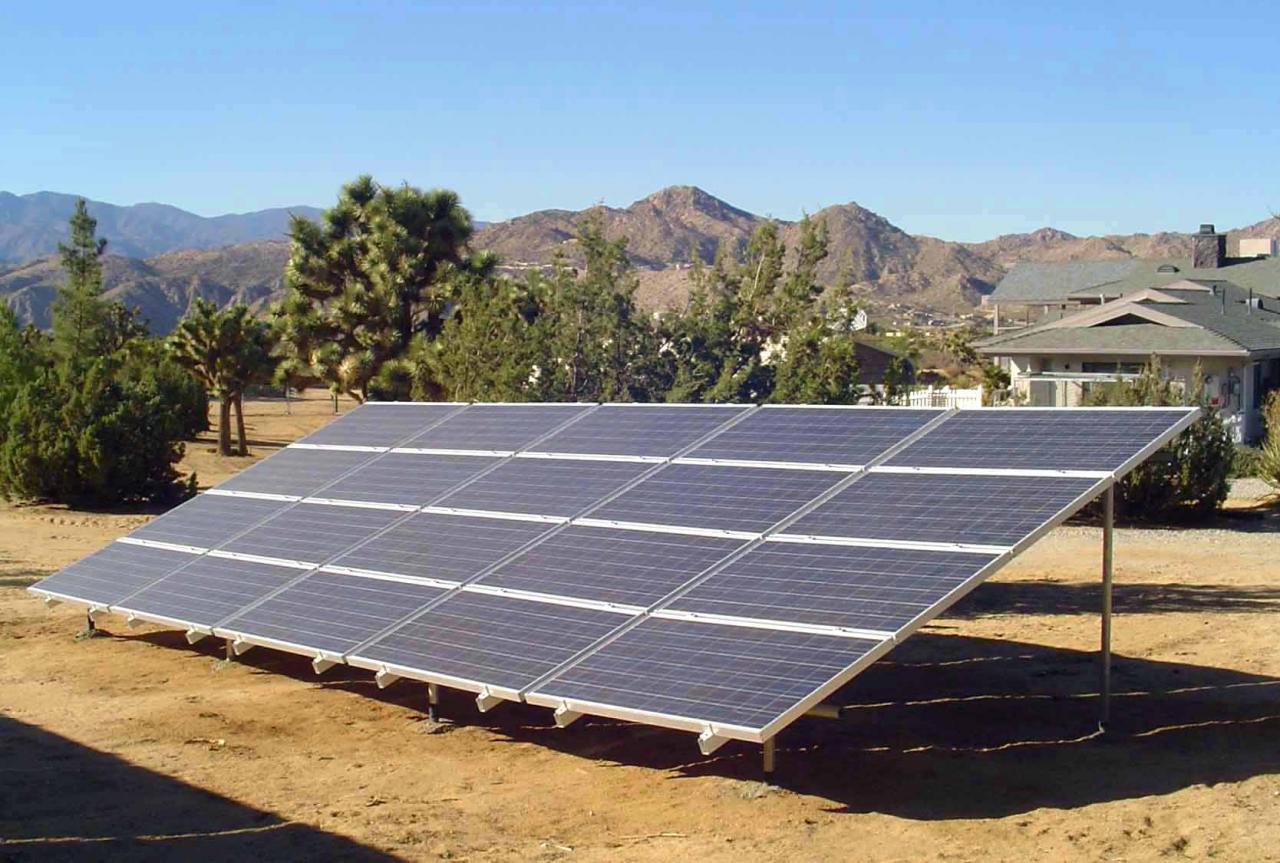
They normally require digging holes for pouring concrete in them. It is done to secure the poles, rack bases etc.

7. Parking Canopies


It is better to have a covered parking area. So install the solar panels and get the shade.

Friday, January 20, 2012

What is the Cost for Converting and Average House to Solar Power?


Solar Power is an efficient energy as you don’t need to depend on fuels or other resources to produce the electricity. Get the photons from sun and let the solar cells to convert into power. Aside from the solar power efficiency it also promotes good responsible attitude towards the environment.  Most of solar energy types are designed for the residential buildings. There are so many types of solar kits that homeowners can purchase to switch their house to solar power.

This is easy to easy as converting your home to solar energy is expensive.  But there are some tax rebates for the people who want to install solar systems.

Solar power can be described that the rays of sun which contains photons passes through the solar cells and solar cells partially absorbs it.  Solar cells convert the sunlight into usable form of electricity or heat.

Types of Solar Energy Uses for Homes


Solar energy can be used for three purposes for home usage. These are:

  1. Water Heating
  2. House Heating
  3. Electricity

1. Solar Water Heaters


Solar water heaters are simple solar devices. Solar water heaters absorb the heat from sunlight. As these heaters are made of dark material which makes them to absorb the sunlight heat and that heat is carried to pipes which contain   water.  Solar water heaters cannot heat up water like other traditional water heaters, but they do make water enough that can help.


Solar water heaters price for houses is almost $11, 00 but water heaters for swimming pools cost more. The cost of water heaters for swimming pools will from $21, 00 to $5,000.

2. Solar House Heating


A full solar heating system for your home which will heat up your home and water is more expensive than simple solar water heating. The average cost of full solar system for home is $47,000 to $100,000. The price usually depends on the size of home and the complexity of the system.

3. Solar Energy for Electricity


Solar electricity producing systems do no use the sun heat for producing electricity. Solar electricity devices basically are comprised of silicon wafers that are known as solar cells. The solar cells convert the sunlight into electricity and transfers is to batteries from where it is supplied to home appliances. An average house needs almost 5 kilowatt electricity. The people who want to convert their homes fully on solar electricity will have to spend $40,000 to $47,000 for a 5 kilowatt solar energy system.

Friday, January 13, 2012

Solar Power Issues


Surely no one will accept such type of electricity, which is available only in daytime and usually on clear days only. For such situation we need electricity storage devices (batteries). But sad to say, that batteries add a lot of cost and maintenance to the PV system. Anyhow currently, it’s a necessity if you want to be completely independent. One solution to this problem is to connect your house to the utility grid, buying power when you need it and selling to them when you produce more than your need. In this way the utility acts as a practically infinite storage system. Of course in most cases the utility have to agree to buy power from you at a much lower price than their own selling price.  You will need special equipment to make sure that power you sell to your utility is occurring at the same time as theirs means that it shares same sinusoidal waveform and frequency. For that safety is basic issue also, the utility has to make sure that if there’s a power outage in your neighborhood, your PV system wont try to feed electricity into line that lineman may think is dead. That is called islanding.

If you decided to use the batteries then keep in mind that batteries should be maintained and also replaced after certain number of years. Usually PV modules lost for 20 years or more while batteries don’t have such long useful life. Batteries in PV systems can be very dangerous because of the energy they store and the acidic electrolytes they contain, so for that you will need a well-ventilated, non-metallic enclosure for them.

Though there are different types of batteries are used but one common characteristic is all batteries is that they are all deep cycle batteries. While a car battery is a shallow cycle battery, deep cycle batteries can discharge more of their stored energy while still maintaining long life. While car batteries discharge a large current for a very short time only for starting up your car and they are immediately recharged also when you drive. A PV battery has to discharge a smaller current for long period (during night), and gets charged then in daytime.

The most commonly used deep cycle batteries are lead acid batteries and nickel cadmium batteries. Nickel cadmium batteries are more expensive but with long durability and can be discharged more completely without harm. Deep cycle lead acid batteries can’t be discharged 100% without seriously shortening battery life and PV systems are generally designed to discharge lead acid batteries no more than 40% or 50%.

To use the batteries another component Charge controller is required to be installed also. Proper caring can enhance batteries life, so that they aren’t over discharged or drained too much. That is the basic function of a charge controller. When the batteries will be fully charged then the charge controller wont let the current from the PV modules continue to flow into them. Same like that when the batteries have been drained to a certain predetermined level, controlled by measuring battery voltage, many charge controllers will not allow more current to be drained from the batteries until they have been recharged. For long battery life charge controller use is so much essential.

Another problem aside from energy storage is that the electricity generated by our PV modules, and extracted by our batteries if we choose to use them, is not the form that’s used by the electrical appliances in our home. The solar system generates the direct current while the electricity supplied to our utility is alternating current. For that an inverter is needed, a device that converts DC to AC. Large inverters can automatically control how your system works.

Some PV modules that are called AC modules are having built in inverter already benefit of that AC module is that it helps to simplify wiring issues.

Now throw in the mounting hardware, wiring, junction boxes, grounding equipment, over current protection, DC and AC disconnects and other accessories and you have yourself a system. It’s highly recommended that the electrical codes must be followed and a licensed electrician who has the experience with PV systems will do the installation. After installation of a PV system it needs a very little maintenance and will provide electricity cleanly and quietly for 20 years or more.

Friday, January 6, 2012

Advancements in Solar Energy Technology


About generating energy through solar panels almost everyone knows. Generating solar power is mostly used in remote areas, but its becoming popular in rural areas also. Solar energy technology is progressing by leaps and bounds. It’s getting better and better.

Here is some latest advancement in this field:

1 – MIT Researchers Print a Solar Cell on Paper


The idea of clean and green fuel is great but it has certain disadvantages. First it’s so much expensive, second their power conversion rate is quite low. Final disadvantage is that you need storage space to save all the power, which is converted by a clean and green technology. The MIT researchers had developed solar cells printed on paper. This technology will take years to be in market for commercial use, but it is an interesting development.

2 – Solar Greenhouse to Produce Food and Electricity


It seems amazing that a greenhouse produce solar power and food. This unique has been done in Italy. Renewable energy companies Solar ReFeel, CeRSAA and solar panel manufacturer Solyndra are the companies are responsible for this project. This solar power greenhouse is being built at CeRSAA’s Albenga, Italy. Basic purpose of this project is to attain production of both food and electricity. The research team is also experimenting to validate the crop growth benefits of Solyndra’s technology by taking help of independent testing by a leading agricultural institution.

3 – Affordable Solar Power with Purple Pokeberries


Researchers at Wake Forest University's Center for Nanotechnology and Molecular Materials are experimenting to attain source of clean and green power through pokeberries because pokeberries can be helpful in making of affordable solar power. Scientists of Nanotech Center had extracted the red dye from pokeberries to paint their efficient and low-cost fiber-based solar cells. The dye had given the desirable results. The dye acted as an absorber and helped the cells minute fibers to capture more sunlight for converting it into power.

4 – Ontario Solar Power could match US Nuclear Power


Queen's University Applied Sustainability Research Group located in Kingston, Canada had came out with two studies, which claim solar power in southeastern Ontario can be created in great quantity.  It’s said that southeastern Ontario has the potential to produce almost as much power as all the nuclear reactors in the United States.

5 – Carbon – based Solar Cells


Solar panels are usually made of silicon. Silicon is not cheap that’s why it raise the costs which makes it expensive for the people who want to use solar energy. Scientists made solar panels with another substance ruthenium which is cheaper than silicon. But ruthenium is a rare metal and its same rare as platinum. So it can’t be used on a mass level production. While carbon is cheap and widely available also, the graphene a form of carbon is having ability to absorb wide range of light frequencies.

6 – World’s Largest Solar Boat


PlanetSolar is world’s largest solar boat and it’s prepared for a world tour. Features of this boat are:

  • 60 ton weight
  • 470 square meter are covered by 38,000 solar cells
  • 103.Kw electricity it generates

18 million euro was spent to make this environment friendly boat. All 38,000 photovoltaic cells were provided by the SunPower Corporation. The solar panels installed on this boat are having pretty decent conversion rate of 22%.

Friday, November 25, 2011

Solar Panels Threat to Biodiversity


Solar panels use is increasing day by day as it is a key ingredient to produce eco-friendly and renewable source of energy. As the energy need will increase in future so far that a lot number of solar panels will be used all over the world. But researchers take it as an eco-conservative concern.

Danger to biodiversity


Mr. Bruce Robertson, Research Associate, from Kellogg Biological Station, Michigan State University says that it is a possible threat to biodiversity. He told that shining dark surface of the solar cells, which reflect the sunlight is same like water surfaces that result aquatic insects like mayflies depositing their eggs on the solar panels. The solar panels will be posing a false habitat hazard to more than 300 species of insect. It will lead to a reproductive failure that may have far-reaching cascading adverse effects to the food chain. These insects fall prey to predators. This data was given in the research which was held in Hungary.

False Surface


Mr. Robertson and his colleagues after the research in Hungary had told in their article that reflected sunlight from expanses of the dark surfaces which are shiny like glass-clad buildings, vehicles, solar panels of all sizes are causing worry for polarized light pollution. Because such dark shiny surfaces cause the caddis flies and other aquatic insects to mistake shining surface to be water surface to lay their eggs.

How to reduce that threat?


According to Mr. Robertson white marking the solar cells may reduce this threat to a great extent. The calculations made by him shows that white marking the solar panels will not affect the efficiency of the solar panels. The researchers had discovered that the aquatic insects can be warned off by fixing white-color grids and other methods to break up the polarized reflection.

Friday, November 18, 2011

Homemade Solar Battery Charger


It is simple to create a homemade solar battery charger, just a build a solar panel and connect it with wires to the battery.  Toe enhance your battery that its charging work more better you will need to install a blocking diode on your solar panel to prevent it from discharging power at night, also install a charge controller between the panel so that the battery can prevent the over or under charging.

Instructions


Building your solar battery charger is not so expensive and complicated. The most difficult step is to get the photovoltaic solar cells, which are needed to build your solar panel. Damaged or rejected solar cells are much less expensive and works almost same like brand new cells. So it will be better for you to get the factory rejected or damaged solar cells.

When you the damaged solar cells then buy all cells of same size so that you will get matching current output; but extras in case some are damaged during shipping or while you are building your solar panels for that buy tabbed cells because it will be easier for you then to assemble them.

After having your solar cells you will need to solder the wires together in order for them to generate electricity to charge your battery. As the cells are so thin and extremely fragile, to protect them from any damage build a shallow wooden frame as a container for their protection; this finished assembly is your solar panel. The frame size for your solar cells depends on that how many solar cells you plan to put in it and how much power you’d like to generate. A solar panel frame basically is made of plywood backing, wood boards or slats to create the sides, pegboard to mount the solar cells to and a Plexiglas cover to protect it from the elements.

Fit together the back and sides of your solar panel frame then lay on the solar cells on the pegboard backing so they can be soldered together by the attached tabs. It’s easy to lay the solar cells upside down on the pegboard while soldering.

When all cells are connected together then turn them right side up on the pegboard and secure them in place. After that place the pegboard into the shallow frame box and attach your diode. Put positive and negative wires through a hole in the frame to the outside of the panel so you that you can plug in the controller or battery.

After checking that the every thing is working properly, then attach the Plexiglas cover now your solar panel is complete. For using your solar panel for battery charging simply put it on a sunny place facing southwards, then connect the positive solar panel wire to your positive battery post and similarly negative wire to your negative post.