Pages

Sunday, June 10, 2012

Buying Wholesale Solar Panels


Solar power use has become more pronounced in the last few years owing to many factors. An aversion from fossil fuel resources, because of price hike and environmental concerns has prompted many people to shift to renewable energy. To complement, a sharp decline in solar panels prices has attracted many people to solar energy market. The ease of installation and minimal maintenance are other advantages, resulting in the solar panel demand to shoot up.

In particular, home owners are using solar power, for it is usually more economical than the utility power supply. It is ideal to invest in this growing market time. Before you start this business you need to have knowledge of the market and there are a few formalities which need to be fulfilled when you dive into this business.

Below are mentioned a few basics you need to know before buying solar panels:

1. Registration with Internal Revenue Service


Before you embark on to the business of solar panels it is very important that obtain an Employer Identification Number from the Internal Revenue Service. To buy solar panels in bulk from whole sale dealers you have to be a legitimate business owner. Whether you are a sole business owner, a proprietor ship or a public limited company; this EIN number serves as a business owner identity. This EIN number serves many other purposes for any business. You can get this EIN number free of cost.

2. Obtain Required Solar Licenses


Usually you will need a license to sell solar panels in your area. This is because other regulations have been put into practice for providing incentives to the solar panel consumers. Contact the office of your secretary of state or attorney general’s office for obtaining this license. However there are some states where you don’t need this license but it is better to have precautionary measures taken.

3. Know your Financial Resources


You should be completely aware of what you have in the pocket when negotiating a deal for whole sale solar panels. There are many dealers who will give you the solar panels at retail price by pretending it as a wholesale price. It is very important that you get quotes from several dealers in order to get an idea of the wholesale price. When you know your budget you can negotiate better deals. A legitimate wholesale dealer always asks for bulk supply of solar panels.

4. Ratings of the Equipment


It is very important to know what sort of equipment is required in your area of sale. Some solar panels are capable to supply large amounts of electric power and are costly enough, but may not be required by the majority of consumers. Some solar panels may be too small to pick an electric load of a typical home. Make sure your whole sale supplier provides a variety of solar panels.

5. Search the Internet


In order to get the best deals visit different selling websites. You can also consider the option of importing the solar panels in bulk if feasible. Ask for samples in order to ascertain the quality of panels and the delivery standards of your whole sale dealer.

Thursday, June 7, 2012

Best Ways for Solar Panel Mounting


Solar panel is actually used to generate energy. The greatest problem of this century is no doubt the energy crisis so the need of such alternatives automatically increases rapidly. Some types of solar panel mounting systems for homes specifically, are discussed here. They are also known as residential mounting systems.

Checking Your Roof


Before starting off with these systems and getting them installed, you must check the undercarriage of your roof. This can be done by any qualified structural engineer so do get their services prior to the installment. It is not required by every country to have an engineer’s stamp on the building but for a Vibrant, a structural engineer is must.

Building Codes


UBC mandates the techniques and the building materials. It actually stands for universal building code. Codes are given after every few years. When any city or a country decides for adopting a new UBC version, the efficiency varies.

Local buildings code usually has some variations from the standard techniques. People must also consider the fire department and electrical code regulations before the installment.

1. Flush Mount


Flush mount is a standard mounting system. The benefit is that a less space is taken by them and it has the lowest visual impact. If you want to install it, your roof will be penetrated into the joists by using a 5/8” long bolt. A standard roofing sealant is also used. There is a metal of L-shaped foot which is fixed by the bolt. Vents, pipes, and other structures are also used accordingly.

2. Tilt Mount


Metal legs are added to the flush mounting for tilting the tops of the panels. It is done in order to gain a better angle towards the southern horizon. This increases the cost in labor and material but you have a benefit that the output is better. The sun hits the mount at an appropriate angle. Thus the maximum solar energy can be used and utilized.

3. Fin Mount


It is specifically for the slopes which face east or west. So this mount is fixed to get a better angle to the south. Legs of varying lengths are installed and this system is comparatively higher than the other ones.

4. Shadows


There are more than one row in tilt and fin mount system. A separate shadow is cast by each row. That’s why each row must be placed at a reasonable distance so the shadow couldn’t be cast by the southern row on the next one. The slope of the roof and the tilt of the planes determine the distance of the rows.

5. Side Mounts


Cantilevered window can be mounted to almost every building side. But prior to the installment the structural engineer must check the condition of the wall, design process and other factors.

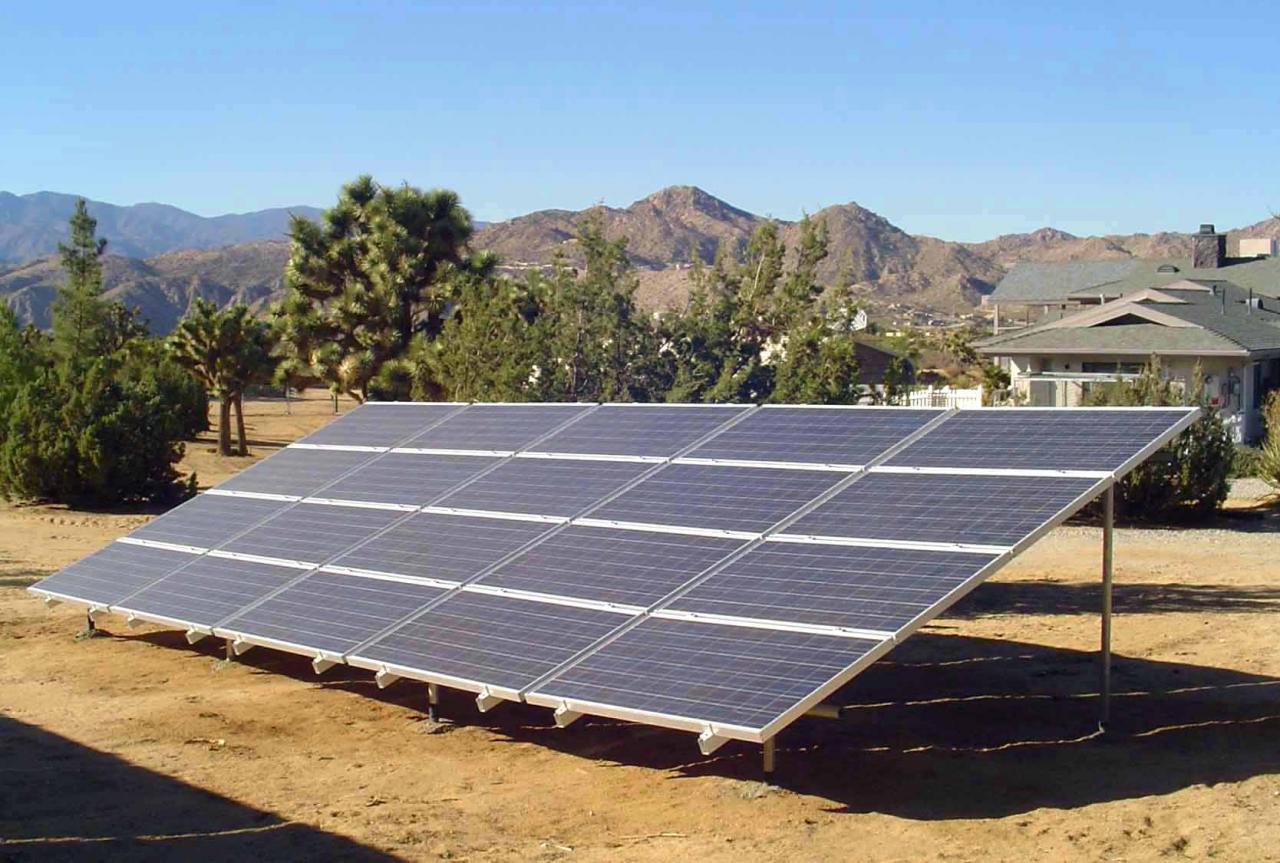
6. Ground Mounts


They normally require digging holes for pouring concrete in them. It is done to secure the poles, rack bases etc.

7. Parking Canopies


It is better to have a covered parking area. So install the solar panels and get the shade.

Wednesday, June 6, 2012

Top 20 Countries with CO2 Emissions


Every country in the world contribute different amount of heat trapping gases to the atmosphere. The following list of 20 countries for CO2 emissions is compiled by the Energy Information Agency (Department of Energy) that estimates carbon dioxide emissions from all sources of fossil fuel burning and consumption. 


Here is the list of top 20 countries in the world with highest carbon dioxide emissions.  A graph of the top 20 carbon dioxide emitters is also available.


Country

Total Emissions
(Million metric tons of CO2)
Per Capita Emissions
(Tons/capita)
1.
China
6017.69
4.58
2.
United States
5902.75
19.78
3.
Russia
1704.36
12.00
4.
India
1293.17
1.16
5.
Japan
1246.76
9.78
6.
Germany
857.60
10.40
7.
Canada
614.33
18.81
8.
United Kingdom
585.71
9.66
9.
South Korea
514.53
10.53
10.
Iran
471.48
7.25
11.
Italy
468.19
8.05
12.
South Africa
443.58
10.04
13.
Mexico
435.60
4.05
14.
Saudi Arabia
424.08
15.70
15.
France
417.75
6.60
16.
Australia
417.06
20.58
17.
Brazil
377.24
2.01
18.
Spain
372.61
9.22
19.
Ukraine
328.72
7.05
20.
Poland
303.42
7.87


The list and the graph compiled by Energy Information agency shows that major carbon dioxide emission are made by developed countries and major emerging economy nations lead in total carbon dioxide emissions. Developed countries are having typically high carbon dioxide emissions and some developing countries lead in the growth rate of carbon dioxide emissions. Obviously these major carbon dioxide emissions by big developed and developing countries are at the core of the challenges the world community faces in finding effective and equitable solutions.

Thursday, May 10, 2012

Build Your Own Wind Powered Generator


The modern world mainly relies on fossil fuel energy. But the fact everyone knows fossil fuels have limits and fossil fuel resources are decreasing. They will end, though not now may be in next some hundred or more years they will end. That’s why all developed countries are looking to alternative sources of energy. Renewable energy forms like solar energy and wind energy. Though these forms are yet not in full practical mode but in future they will be having major role in meeting energy crisis.

Wind energy is a renewable energy type and it doesn’t have any emissions. Wind energy is being used by human from centuries in form of windmills and for sailing ships.

Wind power is still used to generate electricity on large scale. But, how you can produce electricity on small scale through wind power? To produce electricity through wind power a wind generator is needed.

What is Wind Generator?


Wind generator is a device which produces the electricity by harnessing the wind. Wind powered generator produces the electricity with the help of wind turbines. Difference is only that in windmills large wind turbines are used while of wind powered generator small size wind turbines are needed. Wind generator harnesses the wind power through wind turbines and that produced electricity is stored in batteries, which is then used to power the electrical appliances.

You can buy a wind generator and you can make your own wind generator also!

Required Material for Making Wind Generator


Components which are needed to build wind generator are:

  • Blades
  • Generator body
  • Motor
  • Hub
  • Tail
  • Batteries
  • Wind Generator Diode

Tools which you will need to build wind generator are:

  • Saw
  • Bolts
  • Hammer etc.

The blades which will be needed to make a small wind turbine for the generator you can buy from market or you can make them in home. If you make them in home then probable you will make those blades of wood or PVS pipe. If you choose wood then use cedar wood as it’s strong and flexible.

Making Body and Tail of the Wind Generator


You can make the body and tail of the wind generator from recycled double-wall stainless steel chimney pipe. Double wall stainless steel chimney pipe will work as the body of your generator and it can resist the rough weather.


Building Your Own Wind Generator


You will need following things to build your own wind generator:

1. Motor


To build your own wind generator you will have to get the motor which is rated for high DC voltage, low RPM and high current. Size of motor can vary as it depends on the size wind blades of your made up wind turbine. Usually a motor above 40 volts is considered good for making of wind generator. Construct the hub of generator from a circular piece of steel. Blades and motor will be attached with the hub with help of bolts. Batteries are needed to store the electricity which is produced by the generator.

2. Batteries


Batteries will be attached with generator by a thick wire. Batteries are very sensitive to excessive heat or cold so place them on a place where weather doesn’t have affect on them.  The best place will be such place for the placement of batteries where you can keep an eye on them for monitoring.  You will also need a wall meter so that you can know whether batteries are getting charged or not.

3. Wind Generator Diode


The wind generator diode will be attached with the generator as it will allow you to monitor the current flow. You can monitor the wind generator current flow by the help of generator   diode which will show that current flowing is on right direction which is towards batteries and toward generator.

4. Inverter


You will also need a good quality inverter which you will have to attach with the batteries. The inverter will convert the DC current into AC so that appliances in your home can use that power.

Bottom Line


Though yet wind energy is having major part in meeting energy challenges of world. But use of wind energy is growing rapidly around the world. Statistics of last five years shows that use of wind energy had got doubled in these past 5 years.  It is a solid fact that wind energy is environment friendly.